Key Takeaways
- Eczema often gets worse in winter because cold outdoor air, low humidity, and indoor heating pull moisture out of the skin.
- Dry skin weakens the skin barrier, the outer layer that keeps water in and irritants out, which makes flare-ups more likely.
- Small changes help, such as shorter warm baths, thicker moisturizers, soft cotton clothing, and a humidifier.
- If your usual routine stops working, it may be time to update your eczema treatment plan with a specialist.
- Central New York Allergy (CNY Allergy) is a trusted allergy and eczema practice in Liverpool, NY, and you can request an eczema appointment with CNY Allergy online.
How Do Cold Air and Low Humidity Affect the Skin Barrier?
Eczema, also called atopic dermatitis, is a long-lasting skin condition that causes dry, itchy, and inflamed skin. It is very common. According to the Mayo Clinic News Network's overview of atopic dermatitis triggers, it affects 15% to 20% of children and 8% to 10% of adults.
Healthy skin has a strong barrier. Think of it as a protective wall that holds moisture in and keeps irritants out. With eczema, that barrier is already weaker than usual. So when the weather changes, the skin feels it first.
In Central New York, late fall and winter bring a few changes all at once:
- Colder temperatures outside
- Lower humidity, which means less moisture in the air
- Wind, which can chap exposed skin on the face and hands
The American Academy of Dermatology's (AAD) winter eczema care guide notes that dry air, cold temperatures, and indoor heating can all irritate the skin and cause eczema to flare.
Why Does Indoor Heating Make Winter Dryness Worse?
Once the furnace kicks on, the air inside your home gets even drier. Many people move back and forth all day between cold, dry air outside and warm, dry air inside. That constant shift can leave skin tight, cracked, and itchy.
Other winter habits can add to the problem:
- Long, hot showers that strip away the skin's natural oils
- Heavy layers that make you sweat, which can trigger itching
- Wool sweaters and scarves that rub against sensitive skin
- Spending more time indoors near dust mites and pet dander, two common eczema triggers listed on the CNY Allergy eczema treatment page
Common Eczema Flare-Up Patterns in Colder Months
Winter eczema does not look the same for everyone. Here is how normal winter dryness compares with an eczema flare:
| Normal Winter Dry Skin | Winter Eczema Flare | |
|---|---|---|
| How it feels | Tight or rough | Intensely itchy, sometimes painful |
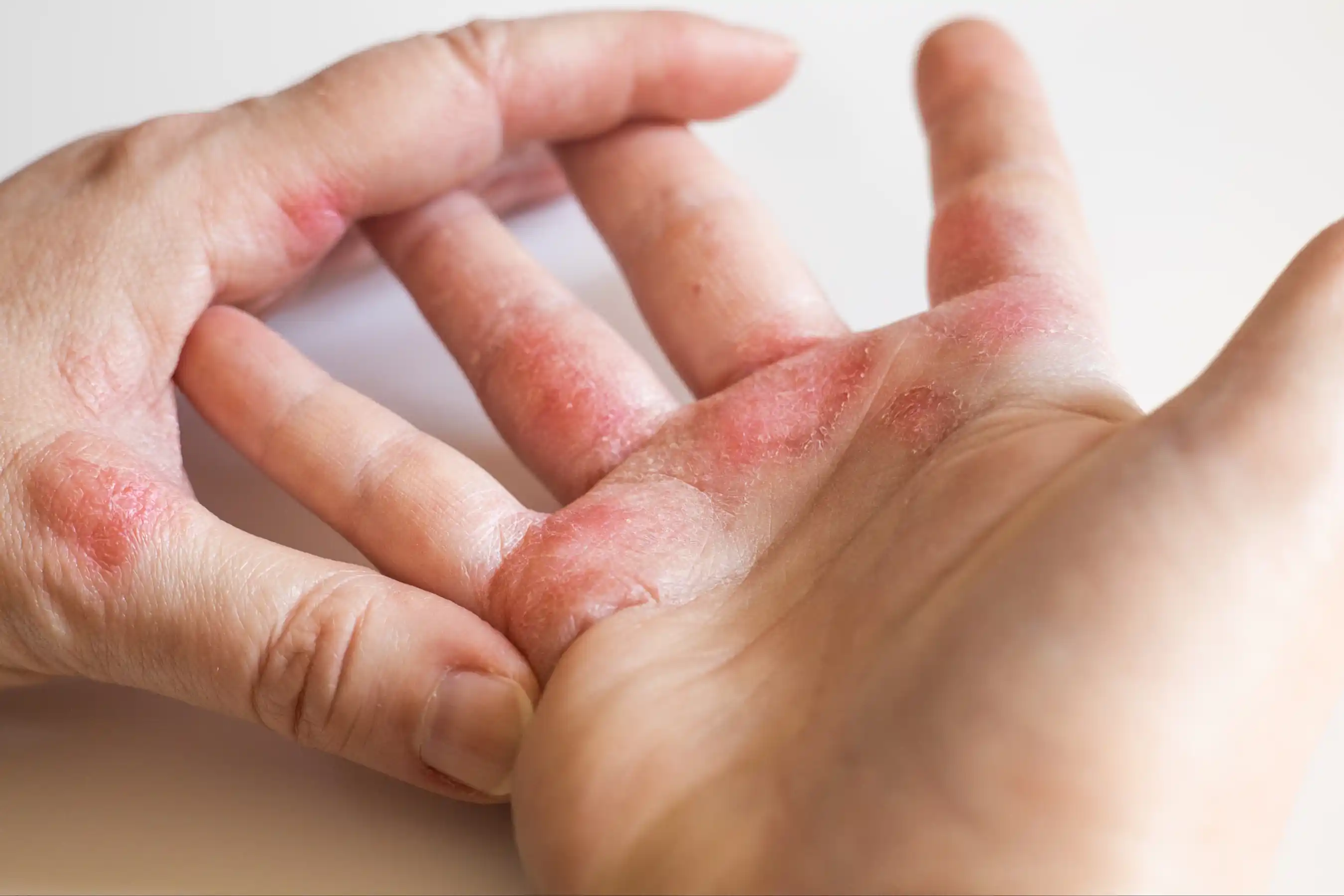
| How it looks | Dull or slightly flaky | Red or brownish-gray patches, small bumps, thick or cracked skin |
| Where it shows up | Hands, shins, lips | Hands, inner elbows, behind the knees, face, and neck |
| How it responds to lotion | Usually improves in a few days | May keep coming back or spread |
| Effect on daily life | Mild | Can disrupt sleep, work, and school |
If your symptoms look more like the right-hand column, a specialist can help you find out what is driving the flare.
Adjusting Your Moisturizing Routine for Winter Weather
The good news is that a few simple changes can make a big difference. Experts recommend the following:
Bathe Smarter
- Use warm water, not hot. The AAD recommends warm water for bathing during winter.
- Keep showers short and use a gentle cleanser.
- Apply moisturizer or medicine within three minutes of getting out of the tub or shower, as advised in National Jewish Health's winter eczema tips.
Choose a Thicker Moisturizer
- Switch from a light lotion to a thick cream or ointment. The AAD notes that ointments hold more water in the skin.
- Moisturize after every bath, shower, and hand washing, and again before bed.
Protect Your Skin From Irritants
- Wear soft fabrics like cotton, and avoid wool and acrylic.
- Use dye-free and fragrance-free laundry products.
- Wash new clothes before you wear them.
- Keep fingernails short to limit damage from scratching.
Add Moisture to the Air
- Run a humidifier when the air in your home feels dry.
When Winter Flare-Ups Signal It's Time for a Treatment Update
Home care helps many people. But eczema can change over time, and a routine that worked last winter may not be enough this year. Consider seeing a specialist if:
- Your skin stays itchy and inflamed even with daily moisturizing
- Itching keeps you or your child awake at night
- Patches are spreading, cracking, or bleeding
- Skin looks infected, such as oozing or crusting
- You suspect allergies, such as dust mites, pet dander, or certain foods, may be playing a role
How CNY Allergy Approaches Winter Eczema Treatment
As an allergy practice, CNY Allergy looks at both your skin and the possible allergic triggers behind it. A visit usually starts with a detailed talk about your symptoms, past treatments, and lifestyle. If an allergic link is suspected, the team may recommend a skin test to find specific triggers.
From there, your personalized plan may include:
- Moisturizers and gentle skin care routines to repair the skin barrier
- Medicated creams, such as corticosteroids or calcineurin inhibitors, to calm inflammation and itching
- Advanced or systemic options for more severe cases
CNY Allergy treats all forms of eczema, not only allergic eczema. Many patients with eczema also live with asthma or seasonal allergies, which the team also manages through its allergy care services.
Get Ahead of Winter Eczema Flares in Liverpool, NY
Cold, dry air and indoor heating weaken the skin barrier, which is why eczema often gets worse in winter. CNY Allergy can help you find your triggers and build a winter plan that keeps your skin calm.
Ready for relief this season? Request an appointment for eczema treatment at CNY Allergy and learn more about personalized eczema care at CNY Allergy.
Frequently Asked Questions
Why does eczema get worse in winter?
Cold air outside and dry, heated air inside both pull moisture from the skin. Because eczema already weakens the skin barrier, this extra dryness makes it easier for itching and inflammation to flare.
What is the best winter eczema treatment?
There is no single best treatment. Most people do well with a mix of thick moisturizers, short warm baths, gentle products, and a humidifier. If flares continue, a specialist may add medicated creams or other options based on your needs.
Where can I get eczema treatment in Syracuse, NY?
CNY Allergy serves patients across the Syracuse area from its office in Liverpool, NY. The team offers immediate availability and later appointment hours for busy schedules.
Should I see an allergist in Syracuse, NY, or a dermatologist for eczema?
Both can treat eczema. An allergist is a good choice when you suspect allergies, such as dust mites, pet dander, or foods, may be triggering your flares. CNY Allergy can test for these triggers and treat your skin at the same time.
How do I find an eczema doctor near me?
If you live in or around Syracuse, CNY Allergy's Liverpool office is close by. Most insurance plans do not require a referral, but you can check your plan on the CNY Allergy insurance page or call the office to confirm.